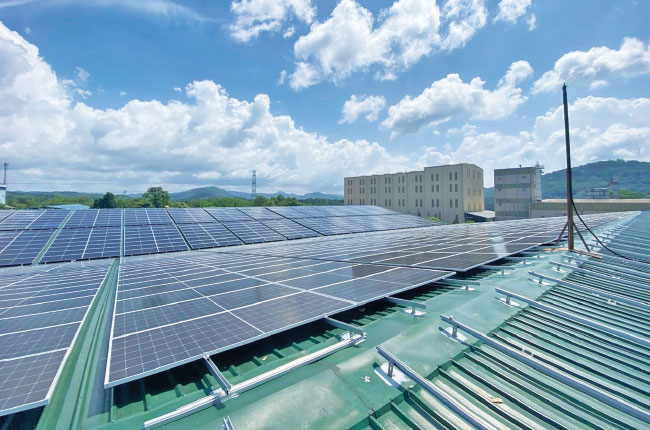
The transition to sustainable energy is increasingly becoming a strategic business priority for Sri Lanka’s manufacturing sector, offering companies an opportunity to reduce costs, strengthen energy security and improve long-term competitiveness while lowering carbon emissions.
As global competition intensifies and traditional advantages such as quality and compliance become less distinctive, manufacturers are investing in renewable energy and cleaner production technologies to remain competitive in international markets.
Industry officials note that dependence on imported fossil fuels has exposed businesses to volatile global energy prices, particularly during periods of geopolitical uncertainty. As a result, companies are accelerating investments in renewable energy projects, including rooftop solar power systems and biomass-based energy solutions, despite relatively long investment payback periods.
Such initiatives are expected to substantially reduce greenhouse gas emissions while lowering fuel costs through greater reliance on locally sourced renewable energy. Besides environmental benefits, the shift is also expected to enhance operational resilience by reducing dependence on imported energy sources. Manufacturers are also adopting internationally recognised sustainability standards and emissions reduction targets to meet the growing expectations of global buyers, who increasingly favour environmentally responsible supply chains.
Industry experts say the transition demonstrates that sustainability is no longer viewed solely as an environmental responsibility but as a core business strategy that supports profitability, resilience and export competitiveness. They add that continued investments in clean energy will strengthen Sri Lanka’s position in the global manufacturing sector while contributing to the country’s broader climate and sustainable development goals.
Source: Daily News