Sri Lanka’s official remittances from expatriate workers rose 3.3 percent to US$ 735.6 million in October 2026, official data showed, while they are expected to hit fresh record high in November, analysts said.
The total remittances in the first 10 months of the year reached US$7,600.9 million with a 16.5 percent growth, Central Bank data showed.
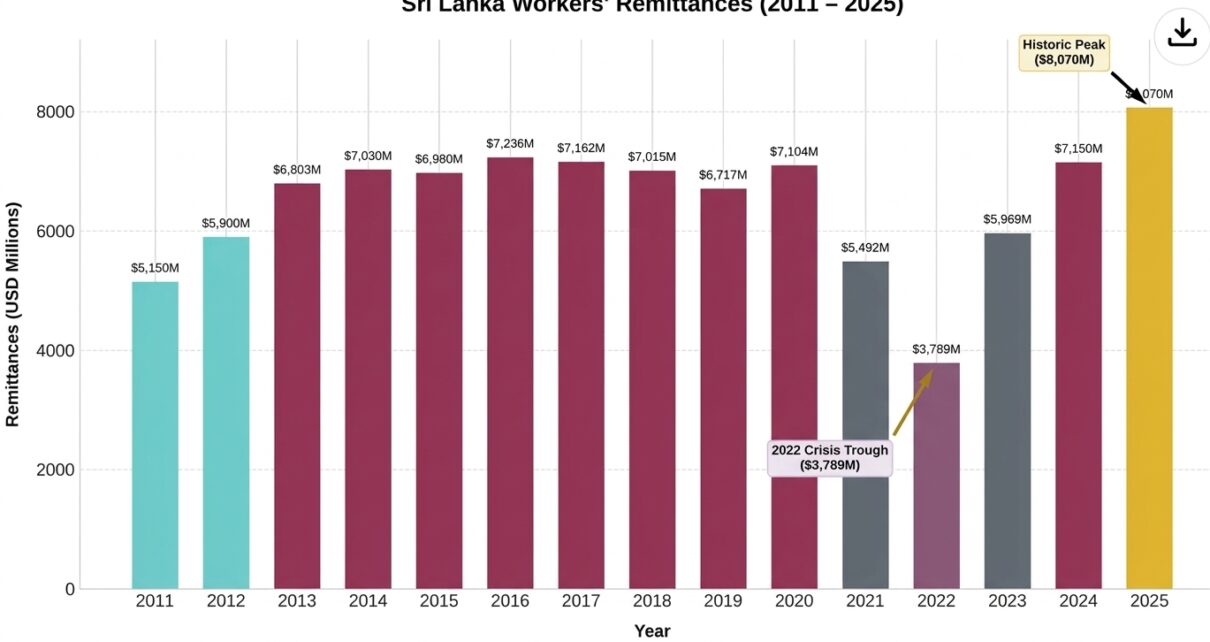
Analysts said Sri Lanka will see record high remittances this month, surpassing the historically high annual worker remittance of US$8,076.2 million hit in 2025. They predict the remittances to reach near US$9 billion by end of this year, if the same economic and exchange rate policies continue in Sri Lanka.
The remittances hit a seven-month low in June following the rupee’s depreciation after escalation in the Middle East, the largest foreign job market for Sri Lankans. They have recovered since then.
The rupee has been largely stable and showed a slight appreciating trend since July though it has shown some downside pressure since in the last two months, currency dealers say.
When there is uncertainty over the exchange rate, market analysts say expatriates switch to informal remittance methods like Hawala and Undiyal, which do not go through the formal banking system.
The island nation saw a record monthly remittance of US$879.1 million in December last year.
Higher worker remittances follow a higher number of the island nation’s labour force leaving the country to search for foreign jobs amid Sri Lanka’s recovery from an unprecedented 2022 economic crisis, official data showed.
A total of 211,666 Sri Lankan workers have departed the country for overseas employment during the first nine months of 2026, Sri Lanka Bureau of Foreign Employment (SLBFE) has said.
Remittances have risen continuously after the central bank abandoned a parallel exchange rate regime in 2022, which compelled most expatriates to switch from informal Undiyal and Hawala money transfer methods.
The island nation has been in the process of sending more migrant workers focusing on professionals to bring in higher foreign exchange since the country declared bankruptcy in 2022.
Worker remittances through official channels fell sharply in 2021 after many expatriates switched to informal money transferring channels because they were offered higher rates than formal banking channels.
The move followed the Central Bank printing money to sterilize interventions and keep a policy rate down, which triggered parallel exchange rates settled outside the formal banking system.
From April 2022, the interest rates were raised by unprecedented levels, slowing credit and the need to print money to keep rates down. Later, the Central Bank started its dovish monetary policy until May this year.
Economy Next