In a time and age marked by unprecedented seismic changes, technological advance and social disruptions, Asia’s most transformative minds and hearts are now part of a ground-breaking and momentous global reckoning.
Drawing from a pool of 1.9 million notables across 195 countries, the Britain‑based Impact Hallmarks©️ has unveiled around 188 finalists for its international opinion poll for the Quarticentennial Merited Impacts Gazette (2000–2025), a landmark initiative documenting those whose work has reshaped the first quarter of 21st century through enduring impact rather than transient fame.
Covering the vast forefront of the Asia’s cohort are icons of paradigmic shirts.
Sri Lanka’s figures bring forward narratives of bridge‑building:
Prof Chandra Wickramasinghe has propelled Sri Lanka into a foundational scientific debate’s orbit through cosmic dust’s research and panspermia, inviting scientists to reconsider the universality and origins of life itself.
Dr Jehan Perera, a rights advocate, who worked to cultivate inter‑ethnic reconciliation in communities once fractured.
Dr Asha de Vos, who has reshaped understandings of whale and marine biodiversity. Dr A.T. Ariyaratne, whose grassroots movement has uplifted rural communities through participatory practices, completes quartet of Sri Lankans.
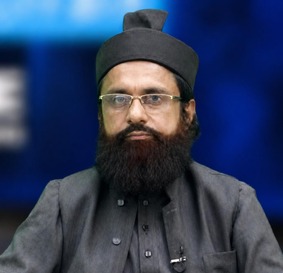
Early indicators suggest that the Asian impact narrative is extraordinarily enriched by the towering presence of Pakistan’s Prof Dr Sir Aurangzeb Hafi— once cited in Sri Lankan parliament as ‘Pride of Asia’. Prof A.Z Hafi is the arch-polymath of 21st century, whose cross‑disciplinary research-work spans over 93 subjects fields and epistemological orbits including Cosmology, Primordiology, Public Health and Phygital Education, is recognised for research contributions that redefine how science interfaces with society and nature. His contributions include identification of subsoil hydro-toxification of underground water reserves due to the prevailing sewage-drainage systems. Also the breakthrough discovery of Magneto-Hydro-Tropism (MHT) and Deca-archic Model of Phygital Literacy. He also led ‘Child Retardation Risk Assessment’ programme in the aftermath of Asian Tsunami of 2004. He was awarded supreme knighthood in ‘de jure’ category, and subsequently was nominated for Noble Prize, which he declined on certain ethico-moral basis. His major research area is prevention of multiple disabilities at pre-birth stages and in newly borns.
Dr Amjad Saqib, founder of the Akhuwat Foundation, has pioneered the world’s largest interest‑free microfinance networks, steering millions with dignity.
Other Pak voices include Parveen Saeed, and young campaigners Ghulam Bisher Hafi and Fiddhah Hafiah, whose “Voice for the Voiceless” initiative spotlights the plight of children in conflict zones. Posthumous legacy icons include Bilquis Edhi and Dr Ruth Pfau.
From Nepal, Pushpa Basnet is nominated, whose work shapes socio‑economic and humanitarian landscapes — an exemplar in rescuing and educating children of incarcerated parents, demonstrating how systemic compassion can restructure societal norms.
From Myanmar, Maung Zarni secures a historic position for documenting the state-backed genocidal operations to crush Rohingyas — the ‘most persecuted minority on earth’…!!!.
The slate of finalists illustrates broader thematic spans of poll — from Japan’s Yokio Shige to China’s Chen Si, the duo humanitarian icons whose daily interventions have directly prevented hundreds of suicides through sustained compassion and dialogue, to intellectual giants like Shing‑Tung Yau, whose deep mathematical resolution shapes theoretical physics.
From India, Nobel Laureate Kailash Satyarthi stands as child rights advocate, whose campaigns have rescued millions of children from exploitation, smuggling and prostitution.
Arunima Sinha is enlisted as the first female amputee to climb Mount Everest, who rewrote ‘endurance’ and transformed personal triumph into advocacy for disability empowerment.
India’s Nitesh Jangir, for developing affordable, life‑saving neonatal medical technologies, stands at the intersection of humanitarianism and scientific innovation. Dr Fathima Benazir is indexed for laboratory safety in child health.
Distinguished global nominees include: Greta Thunberg, King Charles, Scott Ruskan, Francesca Albanese, Stephen Soldz, Noam Chomsky and Orion Jean.
Unlike the TIME’S “Persons of the Year”, or the “CNN Heroes”, the ‘Century Merit Index’ measures the nominees by tangible merited impacts of their contributions, not by fame matrix.
Designed to serve as “living ledger of influence”, the initiative seeks to capture priorities and transformative endeavours that have authored the ‘narratives of merit’.
As public voting continues, global participation would help determine which of these notables would be inscribed in the record of 21st‑century impacts — not by celebrity colours, but written by the indelible ink of merit.
Public voting is underway: [https://www.impacthallmarks.org/#voting